

The Need
ShopAtHome, an online shopping solution that connects digital shoppers with deals and cash back offers, wanted to improve their social media strategy—specifically on Facebook. Their goal was to organically increase brand awareness and audience engagement while using the occasional paid ads or boosted posts to complement organic performance. The focus was on growing Facebook organic reach and improving overall engagement metrics across their Facebook page without relying too heavily on paid reach.
The Strategy
Our social media marketing approach was simple yet effective:
- Review Their Previous Facebook Content Strategy
- Understand the Target Audience and Industry
- Implement Best Practices and Our Research Findings
This structured content strategy aimed to refine performance metrics, improve Facebook reach, and generate more meaningful interactions between ShopAtHome and their followers.
How Reviewing ShopAtHome’s Previous Facebook Content Strategy Revealed Key Areas for Improvement
The first step toward growth was identifying weaknesses in ShopAtHome’s previous Facebook content approach. By analyzing their posting style, engagement, and reach, we could determine exactly where performance fell short and where optimization would deliver the highest impact.
How Posting Style Affected Organic Facebook Performance
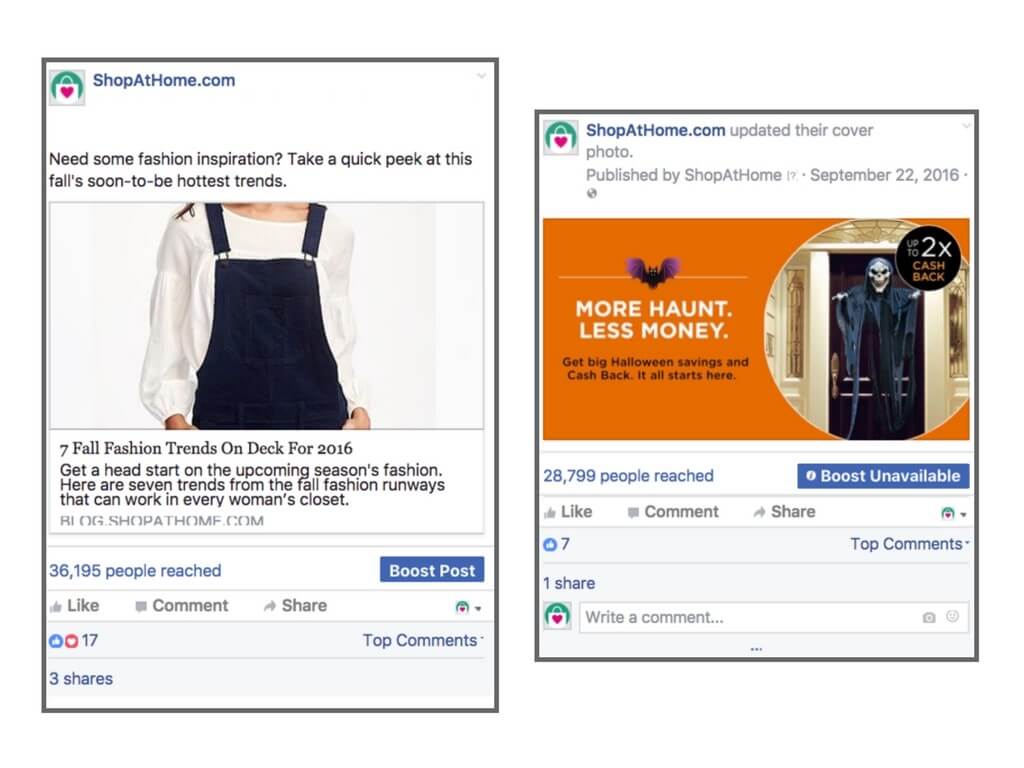
ShopAtHome’s organic posts mainly promoted sales, deals, and brand offers—making their feed very brand-centric. While relevant, these posts lacked variety and didn’t take advantage of Facebook’s preferred content formats.
To improve results, we focused on:
- Creating high-quality, visually engaging content that fits Facebook’s native formats (videos, reels, image posts).
- Incorporating blog links and educational content optimized for social media sharing.
- Cross-promoting posts across channels to increase visibility and engagement.
This combination helped make their content more dynamic, user-focused, and algorithm-friendly.
Why Engagement Metrics Showed the Need for Stronger Post Variety
Despite having over 5 million page likes, most posts averaged only around 10 reactions—indicating minimal engagement. This imbalance showed that:
- Post frequency and type didn’t align with what followers found interesting.
- Content ranking potential in the algorithm was low due to limited interaction.
- Facebook’s recent updates favored posts with authentic conversation, not repetitive promotion.
Increasing engagement required experimenting with diverse post types and prioritizing meaningful interactions that encourage comments and shares.
What Low Reach Revealed About Algorithm Alignment
ShopAtHome’s average organic reach was just 0.6% of total followers. This showed that:
- Content wasn’t surfacing often enough in followers’ feeds.
- Facebook’s algorithm deprioritized low-engagement posts.
- The page needed more interaction signals to increase visibility.
By focusing on post quality and engagement first, we aimed to trigger the algorithm’s ranking mechanisms to improve reach organically.
How Understanding the Target Audience and Industry Shaped Content Strategy
To make Facebook content truly resonate, we needed a clear picture of ShopAtHome’s target audience—who they were, what they valued, and how they engaged online.
Creating Content that Matches the Target Demographic’s Preferences
Through focus group findings, competitor benchmarks, and Facebook audience insights, we identified key behavior patterns. This revealed which messages and content formats sparked the most interest.
By aligning digital marketing efforts with audience expectations, we were able to:
- Craft posts that reflected user interests, not just brand goals.
- Use tone, style, and visuals consistent with what their demographic enjoys.
- Build trust and relatability while improving Facebook reach and engagement rate.
How Targeted Ad Audiences Strengthened Organic Reach
When ShopAtHome used Facebook ads or boosted posts, we applied precision targeting based on interests, purchase behaviors, and demographics.
For example:
- A “Refrigerator Buying Guide” post specifically targeted homeowners and excluded renters.
- Ads focused on people who frequently shop online and seek deals—mirroring the core organic audience.
This balance between organic reach and paid promotion ensured every impression mattered. By avoiding broad, low-relevance audiences, the campaign maximized ROI and engagement simultaneously.
“Facebook’s algorithm is increasingly prioritizing authentic, interest-based interactions over passive likes and follows. To consistently grow organic reach, brands must create conversational content, lean into diverse post formats, and actively engage with their communities.”
— Mari Smith, Facebook marketing expert
How Implementing Best Practices and Research Findings Improved Facebook Reach
After defining the audience and analyzing past content, we began optimizing ShopAtHome’s posting habits, engagement approach, and content tone to align with Facebook’s evolving algorithm.
Why Adjusting Post Frequency and Timing Boosted Organic Reach
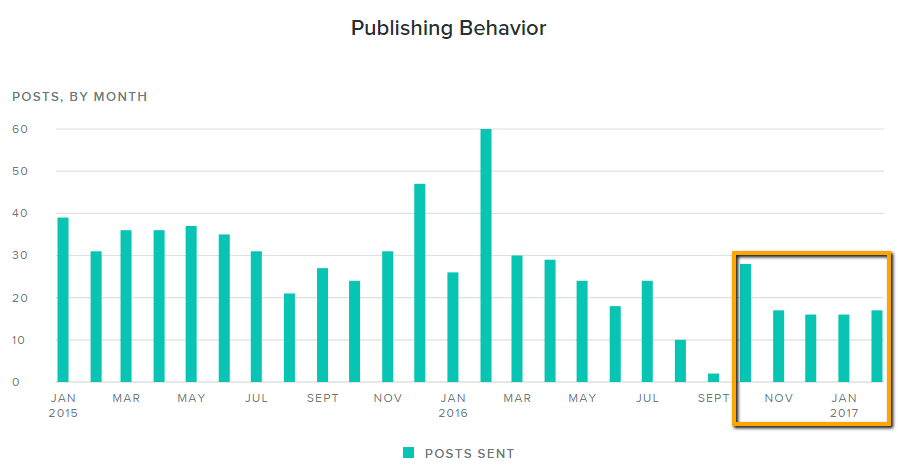
We discovered that overposting diluted performance. Sharing too many low-interaction posts can hurt overall reach because Facebook’s algorithm deprioritizes repetitive or low-quality content.
To counter that:
- We reduced posting frequency but focused on higher-quality, engaging content.
- We scheduled posts at peak activity times based on audience insights.
- We measured response trends to continually refine posting times.
This approach improved both engagement rates and feed ranking, proving that fewer, stronger posts outperform frequent, low-value updates.
How Engaging Content Types Increased Shares and Conversations
Facebook users engage most with content that entertains, educates, or connects emotionally. Knowing this, we:
- Shifted content toward humor, relatable tips, and storytelling.
- Integrated influencer collaborations and shareable posts to encourage dialogue.
- Focused on formats that rewarded “meaningful interactions,” aligning with Facebook’s latest algorithm priorities.
As a result, content became more conversational, shareable, and emotionally resonant.
How Brand-Relevant Storytelling Maintained Authenticity
Even as content evolved, it remained true to ShopAtHome’s brand mission. Posts were designed to:
- Feel genuine and human, not overly promotional.
- Use storytelling to connect deals and savings with real-life experiences.
- Maintain consistency in tone and brand personality across all posts.
This authenticity built stronger trust and increased audience loyalty—two critical ingredients for organic engagement growth.
The Results: How Strategic Changes Drove Major Improvements in Facebook Engagement and Reach
Measurable Engagement Growth Across All Key Metrics
The strategy delivered substantial performance improvements:
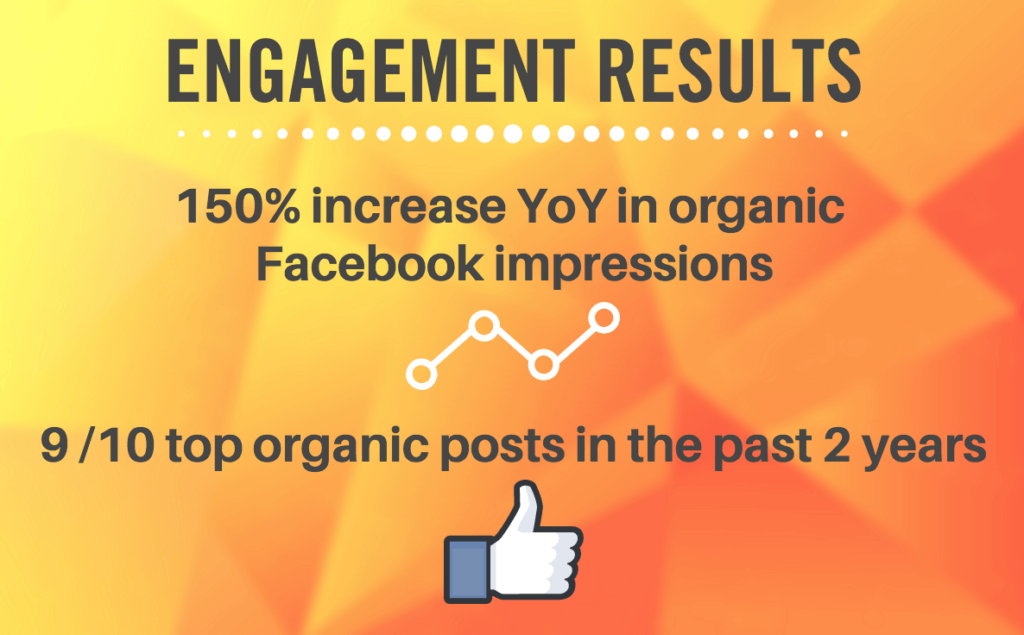
- A 150% year-over-year increase in organic Facebook impressions.
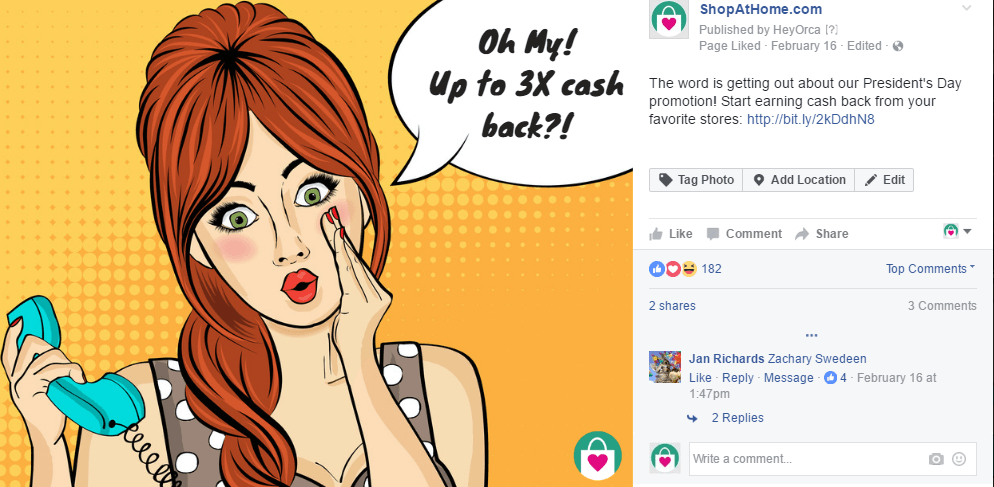
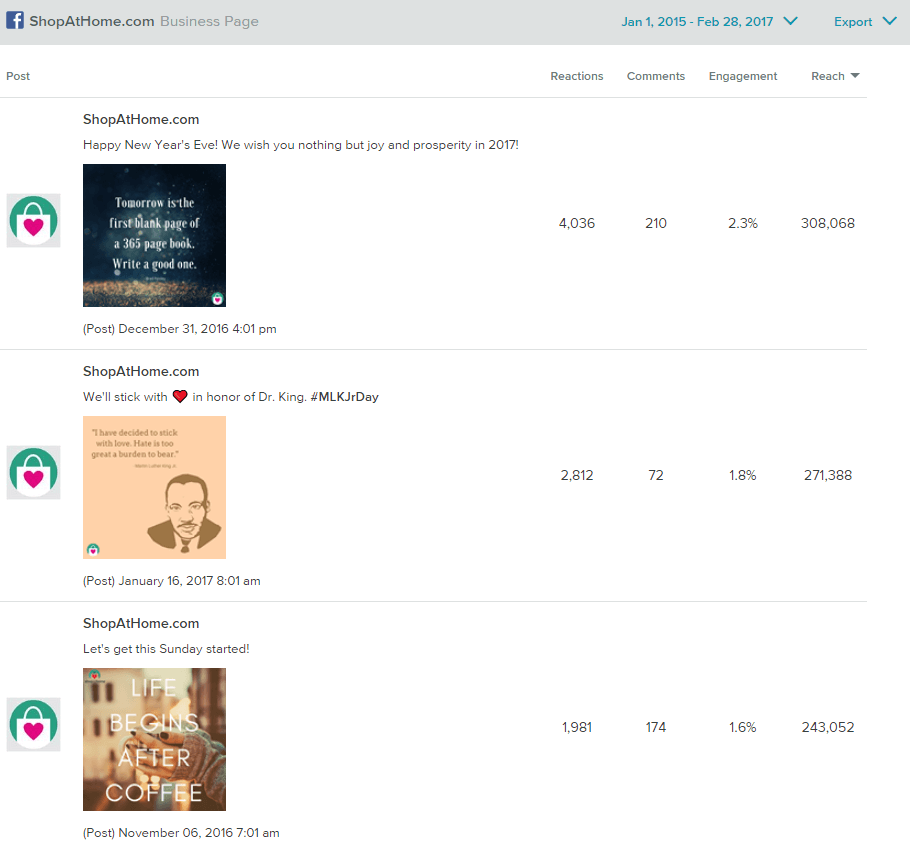
- Between January 2015 and February 2017, 9 out of the 10 top-performing organic posts came from content created between October 2016 and February 2017.
- These posts earned a total of 15,525 reactions, marking a major improvement in engagement rate and post reach.
Clear Gains in Post Reach from Optimized Content
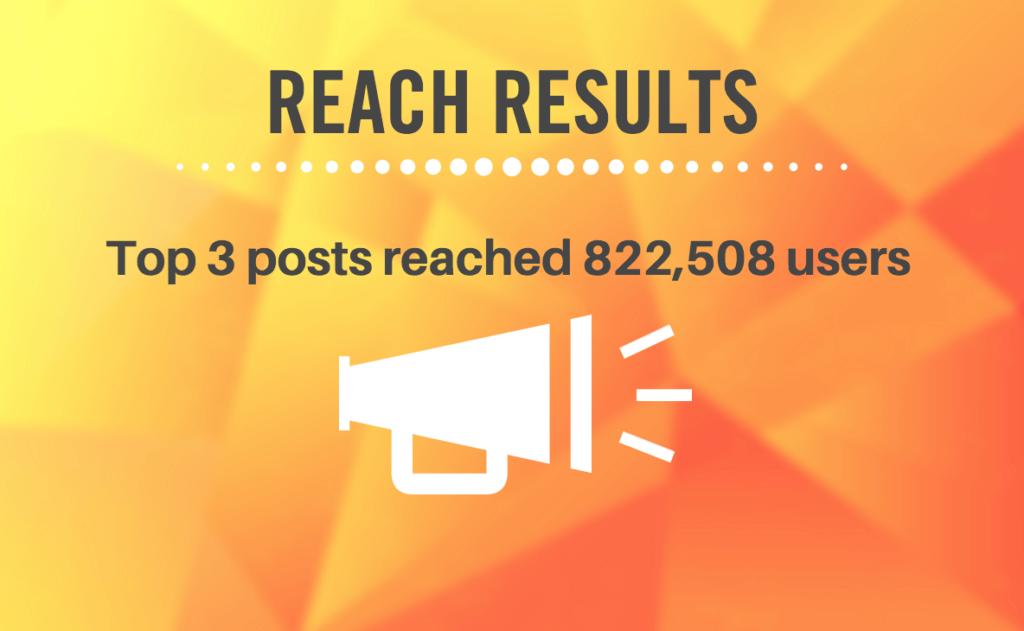
Over the two-year campaign, none of ShopAtHome’s earlier posts came close to matching the reach of the top three posts developed during this period.
- Combined, these posts reached 822,508 users, showcasing a clear jump in organic visibility and engagement.
What the Top Three Facebook Posts Had in Common
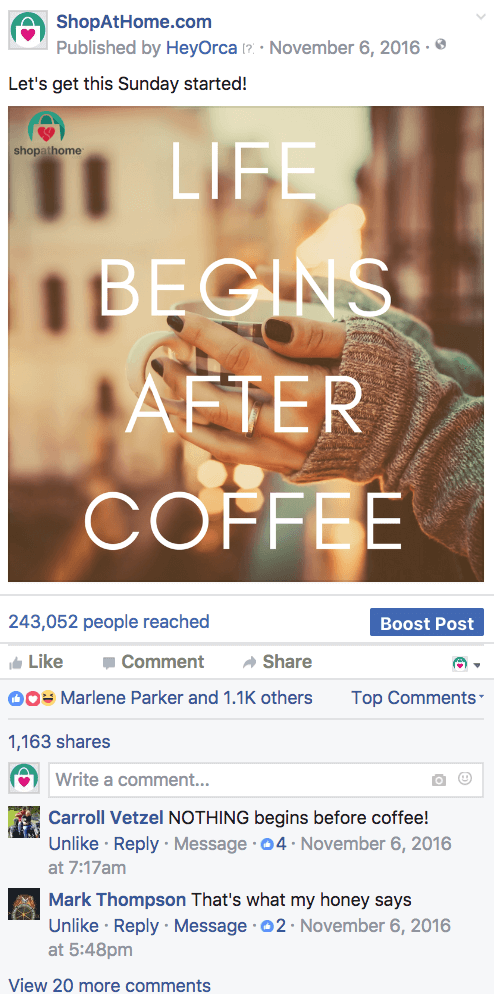
The best-performing posts all shared three characteristics:
- Emotional appeal — content that sparked connection or humor.
- Video-based formats — designed for shareability and algorithm preference.
- Authentic tone — consistent with Meta’s ongoing focus on genuine engagement.
These lessons became the foundation for all future content planning.
How Ongoing Community Insights Continue to Shape Future Facebook Strategy
We continue to learn from the ShopAtHome community—observing which content sparks conversation and how engagement trends evolve across their facebook page and groups.
Success on social media isn’t static. It depends on:
- Continuous analysis of reach and engagement metrics.
- Adapting content to match Facebook algorithm updates.
- Maintaining authenticity and community trust through storytelling.
As the platform evolves, our goal remains the same: keep reaching new audiences and deepen meaningful connections through consistent, thoughtful social media marketing.
Takeaways
ShopAtHome’s case study highlights that true growth on Facebook isn’t just about volume—it’s about quality content, smart targeting, and understanding how Facebook’s algorithm rewards authentic, interactive posts. By refining formats, focusing on engaging content, and embracing algorithm updates, brands can sustain long-term Facebook organic reach and drive real community engagement.
Common Questions About Growing Organic Facebook Engagement
1. What’s the difference between organic reach and paid reach on Facebook?
Organic reach is the number of people who see your Facebook posts without paid promotion, while paid reach comes from Facebook ads or boosted posts. Balancing both in a cohesive strategy maximizes visibility and keeps engagement authentic.
2. How can brands adapt to recent Facebook algorithm changes?
Meta now prioritizes content that encourages meaningful conversations. Brands should focus on storytelling, community building, and visuals like reels and video content. Tracking post performance helps identify what works best after each algorithm update.
3. Why is engagement rate important in social media marketing?
Engagement rate measures how actively your audience interacts with your posts. A high engagement rate improves feed ranking and reflects strong content quality. Monitoring it alongside reach metrics offers a complete view of marketing effectiveness.
4. What types of Facebook content perform best for higher engagement?
Video content, reels, and storytelling posts that mix education with entertainment perform best. Influencer collaborations, community discussions, and authentic customer stories also drive strong engagement.
5. How often should brands post on Facebook for optimal results?
Posting too frequently can lower reach due to low engagement on repetitive content. It’s better to post fewer, high-quality updates that invite interaction. Use metrics to find the ideal posting rhythm for your audience.
6. Should I use hashtags on Facebook posts?
Yes, but sparingly. A few relevant hashtags can improve discoverability, but too many can clutter your message. Combine hashtags with clear visuals and valuable content for best results.
7. How does Facebook compare to LinkedIn or TikTok for brand awareness?
Each platform serves different purposes. Facebook excels at community engagement, LinkedIn supports B2B relationships, and TikTok offers viral reach. Using all three strategically helps expand visibility across audience segments.
8. What are the key takeaways for improving Facebook engagement?
Consistent management, audience interaction, and authentic storytelling drive the best results. Track your metrics, adapt to changes, and focus on creating meaningful conversations to achieve long-term organic growth.